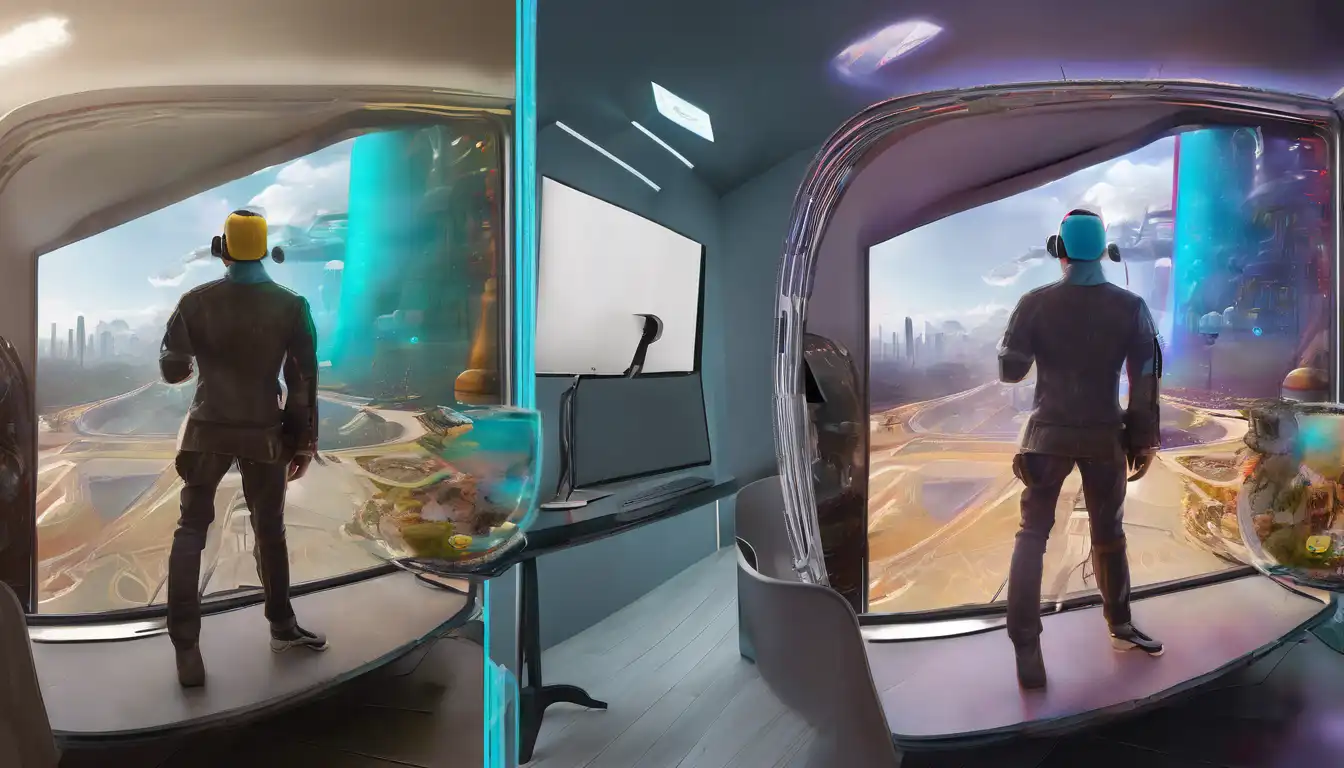
Understanding Virtual Reality and Augmented Reality
In the rapidly evolving world of technology, Virtual Reality (VR) and Augmented Reality (AR) stand out as two of the most exciting and innovative developments. While they are often mentioned in the same breath, VR and AR offer distinctly different experiences. This article delves into the key differences between these two technologies, helping you understand their unique features and applications.
What is Virtual Reality?
Virtual Reality is a completely immersive experience that transports users to a simulated environment. Through the use of VR headsets like the Oculus Rift or HTC Vive, users can interact with a 3D world that is entirely generated by computers. This technology is widely used in gaming, training simulations, and virtual tours.
What is Augmented Reality?
Augmented Reality, on the other hand, overlays digital information onto the real world. Unlike VR, AR does not create a fully immersive environment but enhances the real world with digital details. Popular examples include Pokemon Go and Snapchat filters, which blend digital elements with the user's actual surroundings.
Key Differences Between VR and AR
The primary difference between VR and AR lies in their level of immersion and interaction with the real world. Below are some of the key distinctions:
- Immersion: VR offers a fully immersive experience, while AR enhances the real world with digital overlays.
- Hardware: VR requires a headset and sometimes additional equipment like gloves or treadmills. AR can often be experienced through smartphones or lightweight glasses.
- Applications: VR is predominantly used for gaming, simulations, and virtual tours. AR finds its applications in navigation, retail, and social media filters.
- User Interaction: In VR, users interact within a completely virtual environment. AR allows users to interact with both real and virtual elements simultaneously.
Choosing Between VR and AR
Deciding whether to use VR or AR depends on your specific needs and goals. If you're looking for a fully immersive experience that transports you to another world, VR is the way to go. However, if you want to enhance your real-world experience with digital information, AR would be more suitable.
Future of VR and AR
Both VR and AR are set to play significant roles in the future of technology. With advancements in hardware and software, these technologies are becoming more accessible and integrated into various sectors, including education, healthcare, and entertainment. The line between VR and AR may blur with the development of Mixed Reality (MR), which combines elements of both.
As we continue to explore the potentials of VR and AR, it's clear that these technologies will shape the way we interact with the digital world. Whether for gaming, education, or practical applications, VR and AR offer exciting possibilities that are just beginning to be realized.