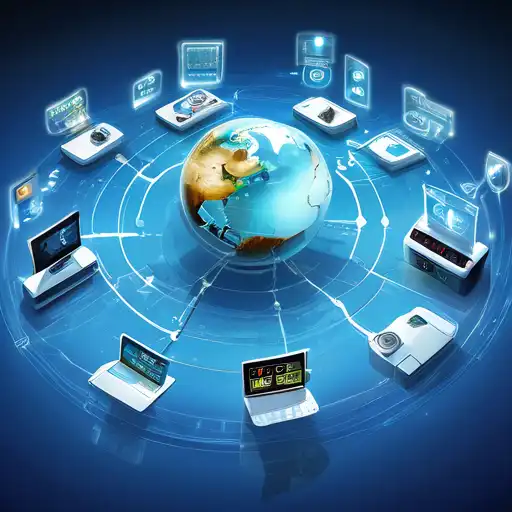
The Smart Revolution: How the Internet of Things is Bridging Global Connections
The Internet of Things (IoT) represents a transformative phase in the digital era, where everyday objects are connected to the internet, allowing them to send and receive data. This innovation is not just about smart devices; it's about creating a seamlessly interconnected world that enhances efficiency, safety, and convenience.
Understanding the Internet of Things
At its core, IoT involves extending internet connectivity beyond standard devices, such as desktops, laptops, smartphones, and tablets, to any range of traditionally dumb or non-internet-enabled physical devices and everyday objects. Embedded with technology, these devices can communicate and interact over the internet, and they can be remotely monitored and controlled.
The Impact of IoT on Daily Life
From smart thermostats that learn your schedule to optimize heating and cooling, to wearable devices that monitor health metrics in real-time, IoT is making life more convenient and efficient. The potential for IoT to improve quality of life is immense, with applications in healthcare, home automation, transportation, and more.
- Healthcare: Wearable devices can track patient health metrics and alert healthcare providers to potential issues before they become serious.
- Home Automation: Smart homes can adjust lighting, temperature, and security settings automatically based on the homeowner's preferences and habits.
- Transportation: Connected vehicles can communicate with each other to avoid accidents and optimize traffic flow.
Challenges and Considerations
Despite its benefits, IoT also presents challenges, including security concerns, privacy issues, and the need for robust infrastructure. Ensuring the security of IoT devices is paramount, as they can be vulnerable to hacking and other cyber threats.
The Future of IoT
The future of IoT is bright, with advancements in technology paving the way for even more innovative applications. As 5G networks become more widespread, the speed and reliability of IoT devices will improve, enabling more complex and critical applications.
For those interested in diving deeper into the world of IoT, exploring smart devices and their impact on modern living can provide valuable insights. Additionally, understanding the role of connectivity in IoT is crucial for grasping how these devices communicate and function within larger networks.
In conclusion, the Internet of Things is not just a technological trend; it's a fundamental shift in how we interact with the world around us. By connecting devices and systems, IoT is making our lives smarter, safer, and more efficient. The possibilities are endless, and the future is connected.