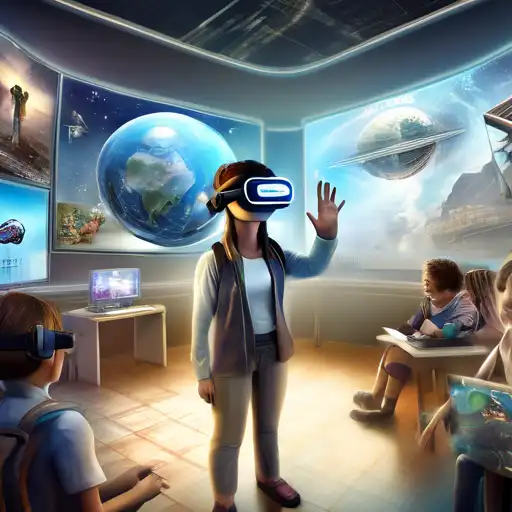
Exploring Virtual Reality: Transforming Educational Landscapes
Virtual Reality (VR) is rapidly becoming a cornerstone in the evolution of educational methodologies. By immersing students in a three-dimensional environment, VR offers an unparalleled interactive learning experience that traditional classrooms cannot match. This article delves into how VR is setting the stage for the next frontier in education, enhancing engagement, retention, and accessibility.
The Impact of VR on Learning
VR technology has the potential to revolutionize the way educational content is delivered. Through immersive simulations, students can explore historical events, dissect complex biological structures, or even conduct chemical experiments in a safe, controlled virtual space. This hands-on approach not only boosts comprehension but also fosters a deeper connection with the subject matter.
Benefits of Virtual Reality in Education
- Enhanced Engagement: VR captivates students' attention by placing them inside the learning material, making education both fun and effective.
- Improved Retention: The immersive nature of VR helps in better retention of information by engaging multiple senses in the learning process.
- Accessibility: VR can bring distant or inaccessible environments into the classroom, from the depths of the ocean to the surface of Mars.
- Customized Learning: VR allows for personalized learning experiences, catering to the individual pace and style of each student.
Challenges and Considerations
Despite its benefits, the integration of VR into education comes with its set of challenges. The cost of VR equipment and the need for technical support can be prohibitive for some institutions. Additionally, there is a learning curve associated with adopting new technologies, requiring training for both educators and students.
Future Prospects
As VR technology becomes more affordable and widespread, its adoption in educational settings is expected to grow. Future developments may include more collaborative VR platforms, allowing students from around the world to learn together in virtual classrooms. The potential for VR in education is limitless, promising a future where learning is more interactive, engaging, and effective than ever before.
For more insights into how technology is shaping education, explore our articles on Innovation in Learning and The Future of Classrooms.