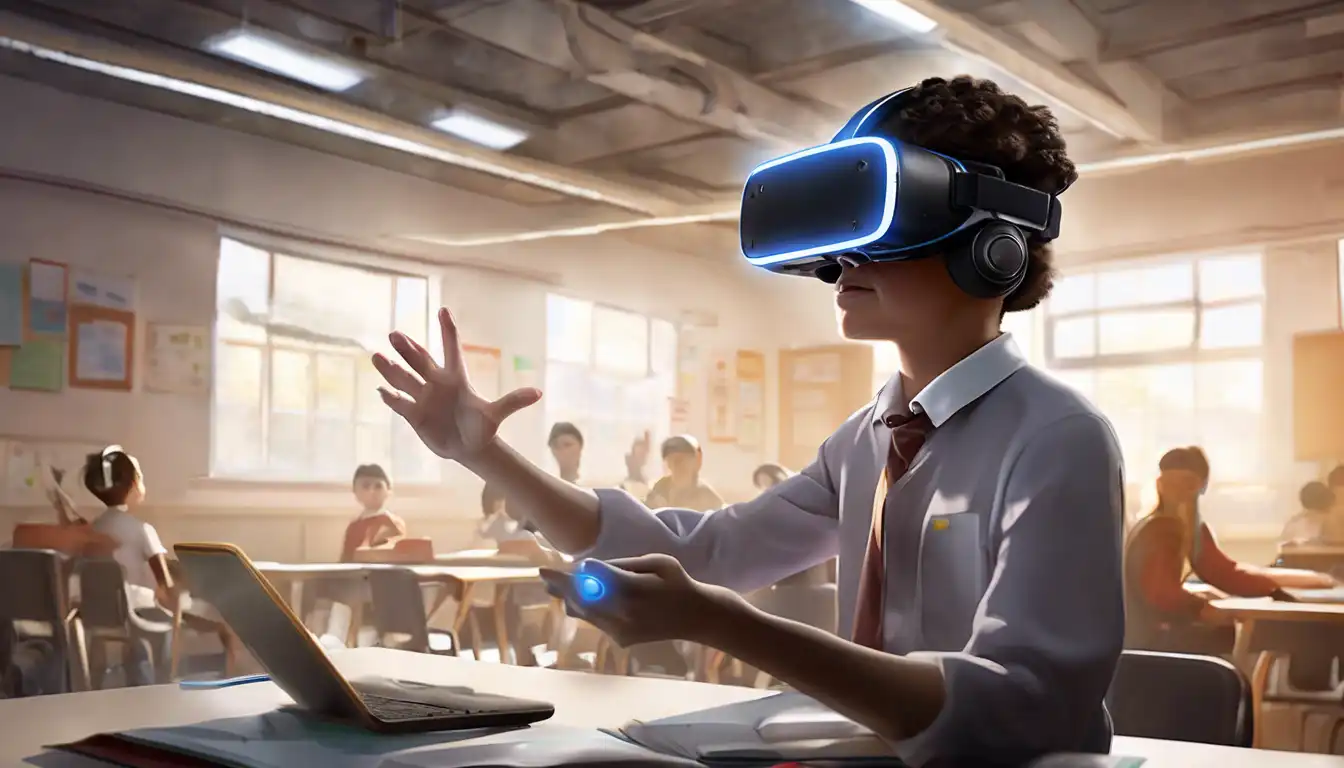
The Transformative Impact of Virtual Reality on Learning and Skill Development
Virtual Reality (VR) technology has rapidly evolved from a futuristic concept into a practical tool that is reshaping industries, including education and training. By creating immersive, interactive environments, VR offers unparalleled opportunities for experiential learning and skill acquisition. This article delves into the potential of VR in transforming educational methodologies and professional training programs.
Revolutionizing Classroom Learning
Traditional classroom settings often struggle to engage students and cater to diverse learning styles. VR introduces an interactive dimension to education, enabling students to explore historical events, scientific phenomena, and mathematical concepts in a three-dimensional space. For instance, a history class can transport students to ancient civilizations, while a biology lesson can take them inside the human body, making learning both engaging and memorable.
Enhancing Professional Training
Beyond academic education, VR is making significant strides in professional training. Industries such as healthcare, aviation, and manufacturing are leveraging VR to simulate real-world scenarios. Surgeons can practice complex procedures, pilots can navigate flight simulations, and engineers can interact with machinery in a risk-free environment. This hands-on approach accelerates skill development and enhances safety by allowing mistakes without real-world consequences.
Breaking Geographical Barriers
One of the most compelling advantages of VR in education and training is its ability to transcend geographical limitations. Students and professionals from remote locations can access the same quality of training and resources as those in urban centers. Virtual classrooms and training sessions can connect learners worldwide, fostering global collaboration and cultural exchange.
Challenges and Considerations
Despite its potential, the integration of VR into education and training is not without challenges. The cost of VR equipment and the need for technical infrastructure can be prohibitive for some institutions. Additionally, there is a learning curve associated with using VR technology effectively. However, as the technology becomes more accessible and user-friendly, these barriers are expected to diminish.
In conclusion, VR holds the promise of revolutionizing education and training by making learning more interactive, accessible, and effective. As we continue to explore and address the challenges, the potential for VR to enhance human knowledge and skills is boundless. For more insights into the latest educational technologies, explore our technology trends section.