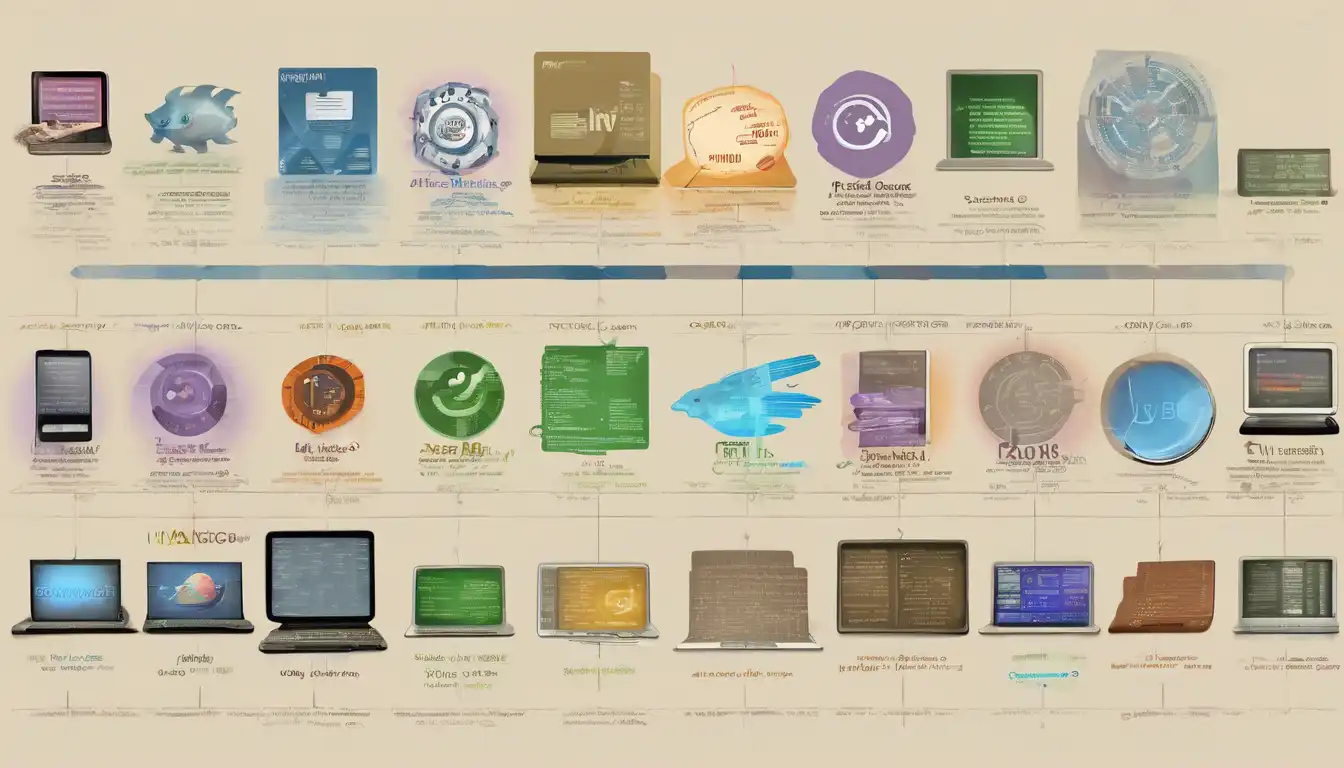
The Dynamic Journey of Programming Languages Through the Ages
The evolution of programming languages is a fascinating tale of innovation, necessity, and the relentless pursuit of efficiency. From the early days of machine code to the high-level languages of today, each step in this journey has been marked by significant milestones that have shaped the way we interact with computers.
The Dawn of Programming
The story begins in the 1940s with the creation of the first programmable computers. These machines required programmers to write instructions in machine code, a tedious and error-prone process. The introduction of assembly language in the 1950s provided a slight abstraction, but it was the development of high-level programming languages like FORTRAN and COBOL that truly revolutionized the field.
The Rise of High-Level Languages
High-level languages allowed programmers to write code that was more readable and easier to maintain. FORTRAN, designed for scientific computing, and COBOL, tailored for business applications, were among the first to gain widespread adoption. The 1960s and 1970s saw the emergence of languages like C, which combined the power of low-level programming with the convenience of high-level syntax.
The Object-Oriented Revolution
The 1980s and 1990s were dominated by the rise of object-oriented programming (OOP) languages such as C++ and Java. These languages introduced concepts like classes and objects, enabling developers to build more complex and modular software systems. The popularity of OOP languages continues to this day, with languages like Python and Ruby embracing these principles.
The Modern Era
Today, the programming landscape is more diverse than ever. Languages like JavaScript have become indispensable for web development, while Python's simplicity and versatility have made it a favorite among beginners and experts alike. The rise of mobile computing has also spurred the development of languages like Swift and Kotlin, designed specifically for iOS and Android app development.
Looking to the Future
As we look to the future, the evolution of programming languages shows no signs of slowing down. Emerging technologies like artificial intelligence and quantum computing are likely to drive the development of new languages and paradigms. The journey of programming languages is a testament to human ingenuity and our endless quest to push the boundaries of what's possible with technology.
For those interested in diving deeper into the history of programming languages, exploring the history of computing provides valuable context. Additionally, understanding the basics of software development can help appreciate the impact of these languages on modern technology.