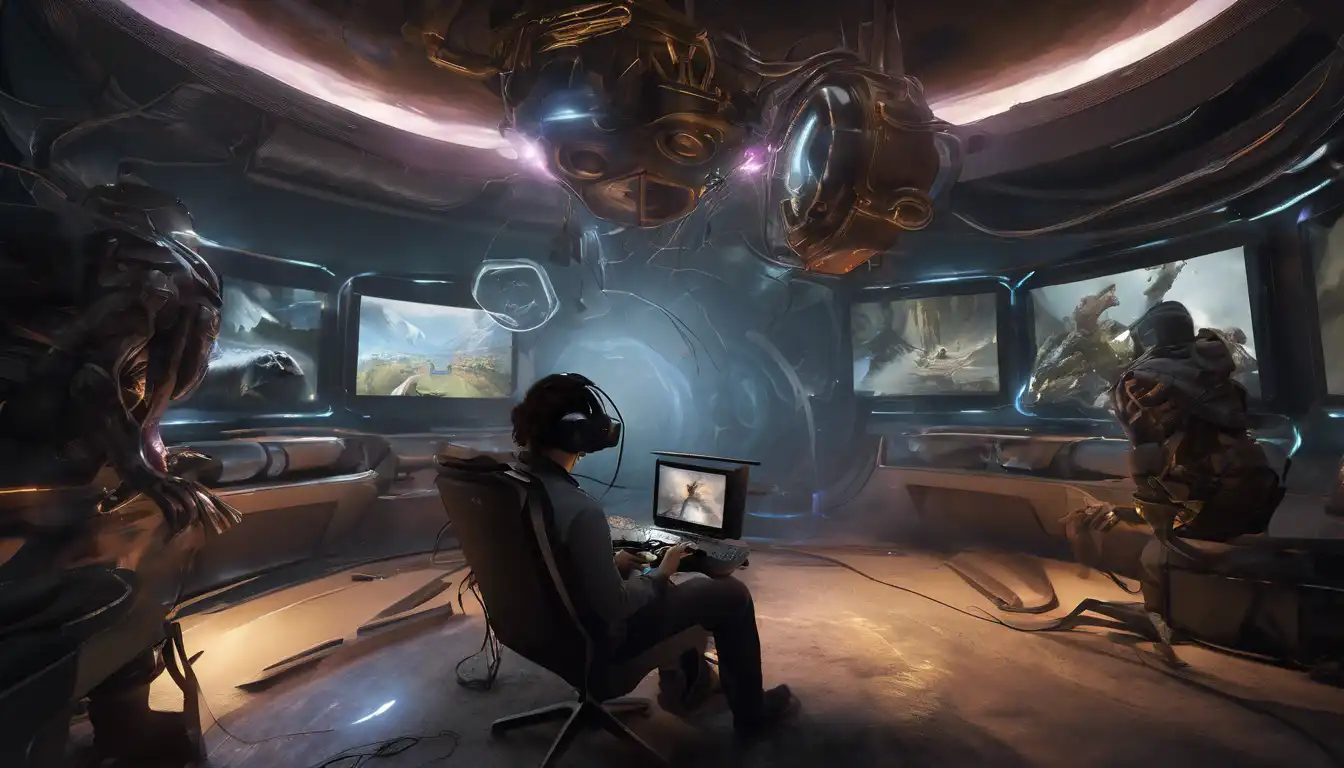
Introduction to Immersive VR Challenges
Creating immersive Virtual Reality (VR) experiences is a frontier that many developers and designers are eager to explore. However, the path to crafting deeply engaging VR worlds is fraught with challenges that span technical, creative, and psychological domains. This article delves into the primary obstacles faced by creators in the VR space and offers insights into overcoming them.
Technical Limitations
One of the most significant hurdles in VR development is overcoming technical limitations. High-quality VR requires powerful hardware to render immersive environments smoothly. Developers must balance graphical fidelity with performance to avoid motion sickness, a common issue in poorly optimized VR experiences.
- Hardware requirements can limit accessibility for a broader audience.
- Developing for multiple platforms increases complexity and cost.
- Real-time rendering demands can strain even the most advanced systems.
Designing for Immersion
Immersion is the cornerstone of VR, but achieving it is easier said than done. Designers must create environments that feel alive and responsive to the user's actions. This involves intricate level design, realistic physics, and interactive elements that respond in real-time.
For more on designing immersive environments, check out our guide on Creating Immersive Environments.
User Experience and Comfort
Ensuring a comfortable and intuitive user experience is paramount. VR can induce motion sickness if not carefully designed, with factors like locomotion methods and frame rate playing critical roles. Additionally, interfaces must be intuitive, as traditional input methods may not translate well to VR.
- Locomotion techniques must minimize discomfort.
- User interfaces need to be redesigned for 3D spaces.
- Feedback mechanisms are essential for user orientation.
Content Depth and Engagement
Beyond technical and design challenges, creating content that keeps users engaged over time is a daunting task. VR experiences must offer depth, whether through storytelling, gameplay, or exploration, to justify the medium's unique demands.
Discover how to enhance engagement in our article on VR Content Strategies.
Conclusion
The journey to creating immersive VR experiences is complex, requiring a blend of technical prowess, creative vision, and a deep understanding of user psychology. By addressing these challenges head-on, developers can unlock the full potential of VR, offering users unparalleled levels of immersion and engagement.
As the VR landscape continues to evolve, so too will the solutions to these challenges, paving the way for more accessible, engaging, and immersive virtual worlds.