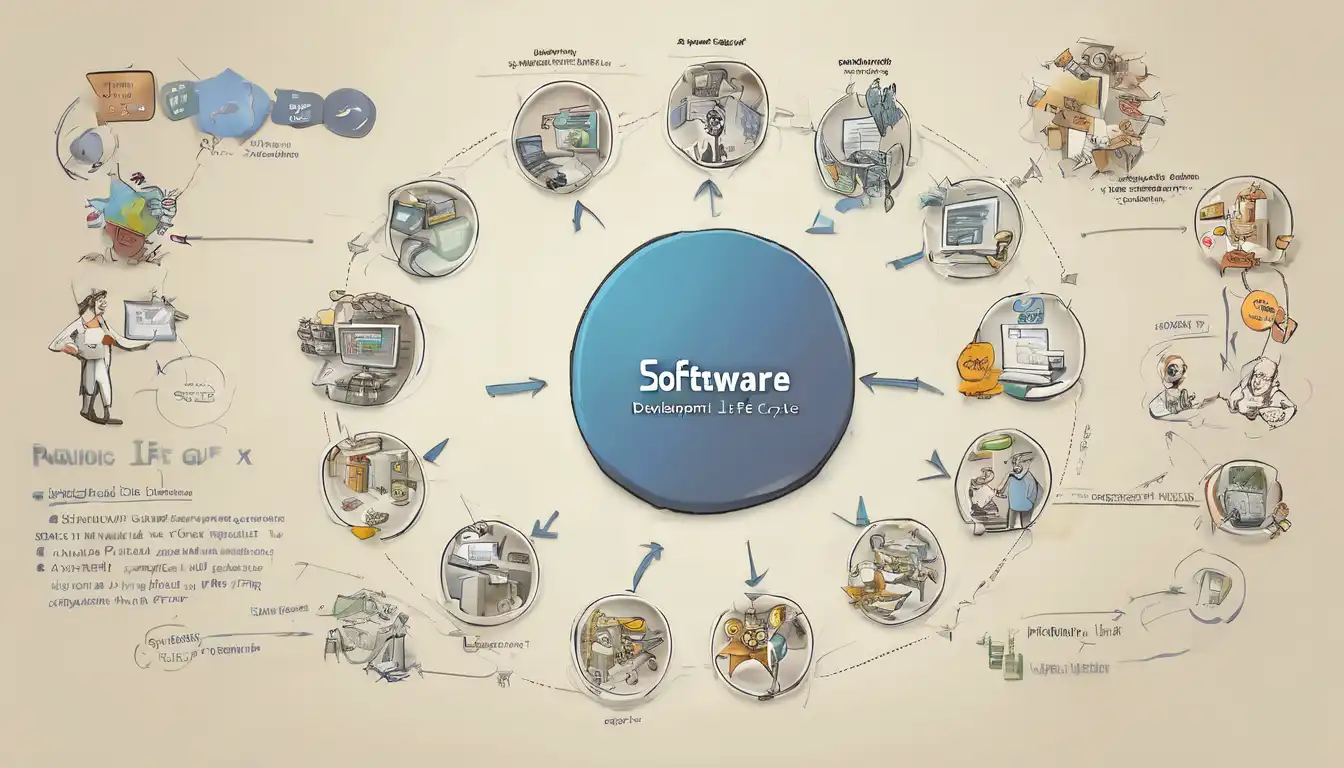
Introduction to the Software Development Life Cycle
The Software Development Life Cycle (SDLC) is a framework that defines the steps involved in the development of software at each phase. It aims to produce high-quality software that meets or exceeds customer expectations, reaches completion within times and cost estimates.
Phases of the Software Development Life Cycle
The SDLC is typically divided into seven phases, each with its own set of activities and deliverables:
- Planning: This initial phase involves gathering requirements from stakeholders and defining the scope and purpose of the project.
- Analysis: During this phase, the team analyzes the feasibility of the project and defines the system requirements.
- Design: The design phase involves creating the architecture of the software, including data structures, interfaces, and modules.
- Development: This is where the actual coding takes place, and the software starts to take shape.
- Testing: After development, the software is tested to identify and fix any bugs or issues.
- Deployment: Once testing is complete, the software is deployed to the production environment.
- Maintenance: The final phase involves updating and maintaining the software to ensure it continues to meet user needs.
Importance of the SDLC
The SDLC is crucial for the successful development of software. It provides a structured approach that helps teams to efficiently plan, execute, and monitor projects. By following the SDLC, organizations can reduce risks, control costs, and improve the quality of the final product.
Choosing the Right SDLC Model
There are several SDLC models to choose from, including the Waterfall model, Agile model, and Spiral model. Each has its own set of advantages and is suitable for different types of projects. For example, the Agile model is ideal for projects requiring flexibility and rapid delivery, while the Waterfall model is better suited for projects with well-defined requirements.
Conclusion
Understanding the Software Development Life Cycle is essential for anyone involved in software development. By following the SDLC, teams can ensure that their projects are completed on time, within budget, and to the required quality standards. Whether you're a project manager, developer, or stakeholder, familiarizing yourself with the SDLC can help you contribute more effectively to the success of your projects.
For more insights into software development, check out our articles on Agile Methodology and Waterfall Model vs Agile.