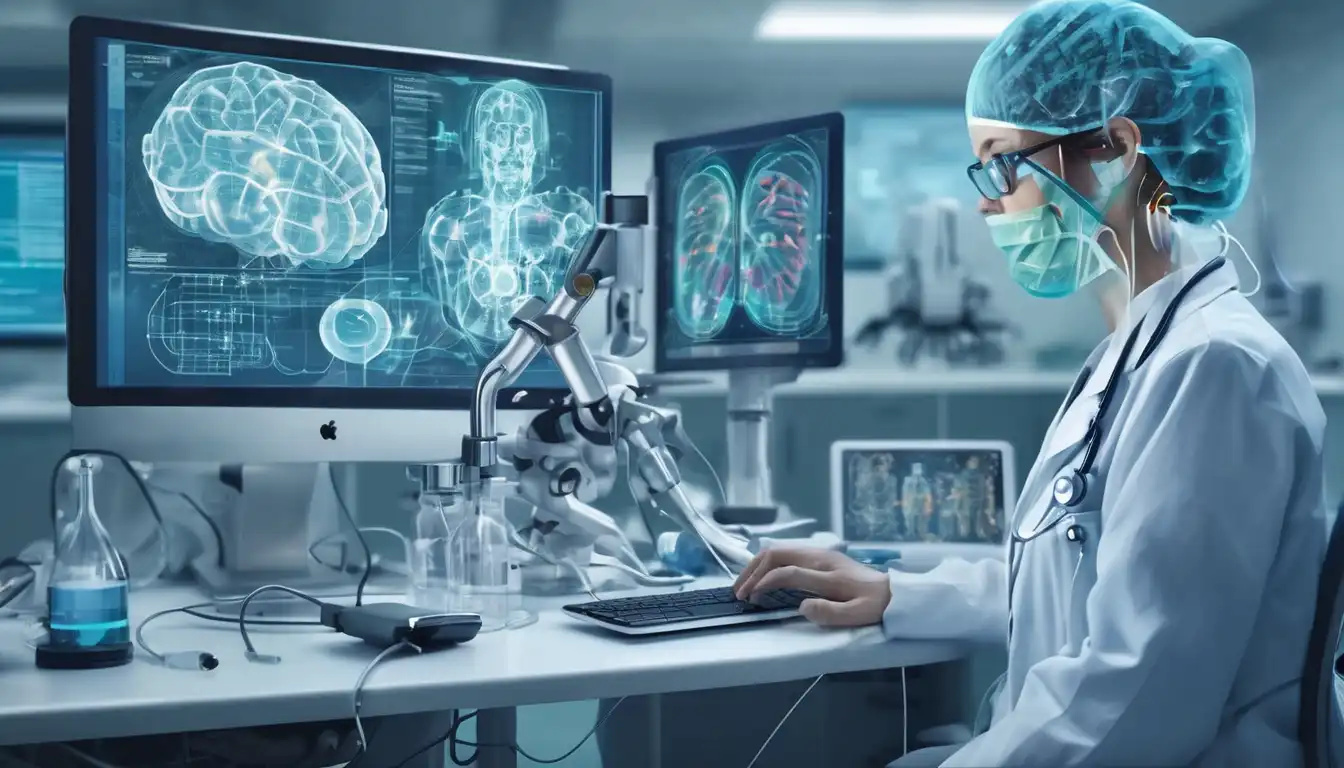
How Machine Learning is Revolutionizing Modern Healthcare
Machine learning has emerged as a transformative force in healthcare, offering innovative solutions that enhance patient care, improve diagnostic accuracy, and optimize operational efficiency. As healthcare systems worldwide face increasing pressure to deliver better outcomes at lower costs, machine learning applications are proving invaluable in addressing these challenges. This technology enables healthcare providers to analyze vast amounts of medical data, identify patterns, and make data-driven decisions that were previously impossible.
Diagnostic Imaging and Medical Analysis
One of the most significant applications of machine learning in healthcare is in diagnostic imaging. Advanced algorithms can analyze medical images such as X-rays, CT scans, and MRIs with remarkable accuracy. These systems can detect abnormalities, identify early-stage diseases, and assist radiologists in making more precise diagnoses. For instance, machine learning models can identify subtle patterns in mammograms that may indicate breast cancer, often detecting malignancies that human eyes might miss.
The integration of machine learning in medical imaging not only improves diagnostic accuracy but also reduces the time required for analysis. This efficiency gain is particularly crucial in emergency situations where rapid diagnosis can be life-saving. Additionally, these systems can help reduce the workload on healthcare professionals, allowing them to focus on complex cases that require human expertise.
Predictive Analytics for Disease Prevention
Machine learning excels in predictive analytics, enabling healthcare providers to identify patients at risk of developing specific conditions before symptoms manifest. By analyzing electronic health records, genetic information, lifestyle data, and environmental factors, machine learning algorithms can predict the likelihood of diseases such as diabetes, heart conditions, and certain types of cancer.
These predictive models empower healthcare organizations to implement proactive interventions and preventive measures. For example, patients identified as high-risk for diabetes can receive personalized lifestyle recommendations and regular monitoring to prevent or delay the onset of the disease. This approach not only improves patient outcomes but also reduces healthcare costs by preventing expensive treatments for advanced conditions.
Personalized Treatment Plans
The era of one-size-fits-all medicine is rapidly giving way to personalized healthcare, thanks to machine learning. By analyzing individual patient data, including genetic markers, medical history, and treatment responses, machine learning algorithms can recommend tailored treatment plans that maximize effectiveness while minimizing side effects.
In oncology, for instance, machine learning helps identify the most effective chemotherapy regimens based on a patient's specific cancer type and genetic profile. Similarly, in mental health treatment, algorithms can predict which medications or therapies are likely to work best for individual patients, reducing the trial-and-error approach that often characterizes psychiatric care.
Drug Discovery and Development
The pharmaceutical industry has embraced machine learning to accelerate drug discovery and development processes. Traditional drug development can take over a decade and cost billions of dollars, but machine learning is streamlining this timeline significantly. Algorithms can analyze molecular structures, predict drug-target interactions, and identify potential drug candidates with higher precision and speed.
Machine learning also plays a crucial role in clinical trial optimization. By identifying suitable patient populations and predicting trial outcomes, these systems help pharmaceutical companies design more efficient clinical trials. This not only reduces development costs but also brings life-saving medications to market faster.
Operational Efficiency and Resource Management
Beyond clinical applications, machine learning is transforming healthcare operations and resource management. Hospitals and healthcare systems use predictive algorithms to forecast patient admissions, optimize staff scheduling, and manage inventory more effectively. These applications help reduce wait times, prevent overcrowding, and ensure that resources are available when needed.
Machine learning models can predict patient no-shows, enabling healthcare providers to better manage appointment schedules and reduce revenue loss. Similarly, predictive maintenance algorithms can forecast equipment failures in medical devices, allowing for proactive maintenance that prevents disruptions in patient care.
Remote Patient Monitoring
The rise of wearable devices and IoT technology has created new opportunities for remote patient monitoring through machine learning. These systems can continuously collect patient data, such as heart rate, blood pressure, and activity levels, and use machine learning algorithms to detect anomalies or concerning trends.
For patients with chronic conditions, remote monitoring powered by machine learning enables early intervention when parameters deviate from normal ranges. This approach is particularly valuable for elderly patients or those living in remote areas, providing continuous care without requiring frequent hospital visits.
Challenges and Future Directions
While machine learning offers tremendous potential in healthcare, several challenges must be addressed. Data privacy and security concerns remain paramount, as healthcare data is highly sensitive. Additionally, ensuring the transparency and interpretability of machine learning models is crucial for gaining trust from healthcare professionals and patients.
The future of machine learning in healthcare looks promising, with advancements in areas such as federated learning, which allows models to be trained across multiple institutions without sharing raw data. As technology continues to evolve, we can expect even more sophisticated applications that will further transform healthcare delivery and improve patient outcomes.
The integration of machine learning in healthcare represents a paradigm shift toward data-driven, personalized medicine. By leveraging these technologies responsibly and ethically, healthcare providers can enhance diagnostic accuracy, optimize treatments, and ultimately save more lives while controlling costs. The journey has just begun, and the potential for positive impact is enormous.